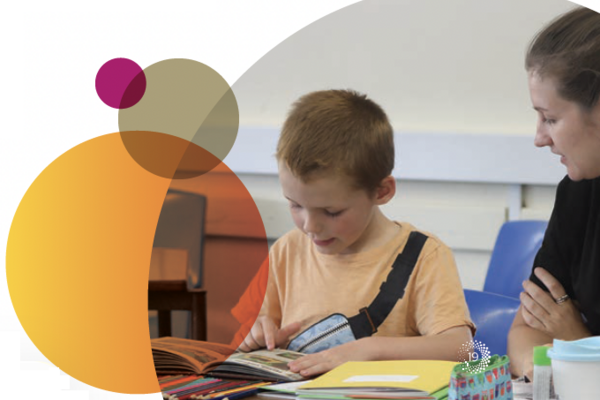
Right support, right time
Our strategy 2026-2030 sets out how we plan to help more small charities access expert support, strengthen leadership and build resilience.


Our strategy focuses on four priorities:
The strategy is informed by research with charities, funders, volunteers and staff, which highlighted the pressures facing small charities and strong demand for practical, tailored, human-led support.
Through our network of skilled volunteers, we will provide practical expertise and human judgement to help small charities and their leaders make better decisions, strengthen their organisations and increase their impact.
You can download a copy of our full strategy below and, if you would like a summarised version, you can also download our 'Plan on a page' document. Scroll down to visit other related pages and read more of the content in our strategy including our ambition and role, our strategic outcomes and priorities, and our Theory of Change.


Across the UK, small charities play a vital role in responding to need, strengthening communities and improving people’s lives, often with limited resources, small teams and stretched leadership capacity.
Throughout this strategy, we use the term small charities to describe our primary focus, while recognising that charities, not-for-profit organisations and voluntary groups all contribute to improving lives and communities.
The context in which these organisations operate is becoming more complex and more pressured. Funding volatility, rising demand, workforce strain, leadership turnover, digital change, increasing regulatory expectations and shifting public policy priorities are now part of everyday reality.
At the same time, the support available to these organisations has become more fragmented. Local infrastructure is uneven, national provision is stretched, and while information and light-touch guidance may be available, deeper support that helps organisations apply advice, make decisions and embed change is much harder to access, particularly where it involves cost.
The rapid development of AI is accelerating this shift. Information, templates and advice are becoming more abundant and easier to access, but this does not remove the need for human support. For smaller charities and community organisations, the challenge
is often not simply finding trusted information, but knowing what applies, what matters most, how to make good decisions, and how to embed change within teams, boards and organisations.

This is where we have a distinctive role. We bring together skilled volunteers and small charities in a relational way to strengthen organisations, develop leaders and deliver lasting impact. We mobilise high quality expertise and apply it in context, through practical support that builds confidence, capability and connection. Our volunteers bring significant experience and credibility, working alongside charity leaders in ways that are trusted, high-quality and often transformational.
Demand for this kind of support continues to grow, faster than our current capacity to deliver it. As a relatively small organisation ourselves with a high quality, resource-intensive model, we cannot meet all need by simply doing more of the same. This creates a clear imperative to focus our efforts where they can make the greatest difference: with smaller organisations that need our support most, and on the issues where practical expertise, relationships and human judgement can have the greatest impact.
If we are to support significantly more organisations, we must evolve how our support is designed, accessed and delivered, while protecting the human, relational quality at the heart of our impact. Charity leaders value the support we provide, but increasingly want a broader range of options that respond to different needs and circumstances. The growth of our mentoring and peer support reflects this shift. In response we will strengthen our organisational capacity and develop new approaches that extend our reach without diluting quality. To do this well, we must also grow in ways that strengthen both capability and inclusion, broadening the experience, skills, backgrounds and perspectives represented across our staff team, volunteer network and Board of Trustees. This will keep us closely connected to the charities we serve and responsive to their changing development needs.
This strategy sets out how we will achieve greater impact at scale. It builds on our strengths while sharpening our focus, positioning us to play a more intentional role within the wider support ecosystem, and championing the value of skills-based volunteering in delivering meaningful, lasting change.

We want to work with small charities, volunteers, funders and partners who share our belief in the power and potential of small charities. Whether you can contribute your time and expertise, join our leadership network, collaborate with us, fund our work or make a donation, we would love to hear from you. Together, we can ensure more small charities receive the right support at the right time and achieve lasting impact for the people and communities they serve.
If you share our vision and would like to invest in stronger charities and greater impact for people and communities across the UK, we would be delighted to hear from you.
Please email [email protected]
Cranfield Trust is an independent, fundraising charity, and we are deeply grateful to everyone who makes our work possible.
We thank our volunteers, who generously share their time, skills and expertise, and our staff, whose care, commitment and professionalism connect charities with the support they need.
We are also especially grateful to the individual supporters, funders, partners and companies whose financial contributions and in-kind support enable us to run the Trust, deliver our services and create space for us to develop our strategic thinking.