Board development support
The Space

May 2026
The Space, a children’s mental health charity based in Somerset, worked with Cranfield Trust volunteer Joel Rose on a board development project at a pivotal moment in the charity’s growth. With a rapidly expanding board still operating too close to day-to-day operations, the charity needed support to clarify trustee roles, establish a shared way of working, and plan for succession. Joel conducted individual conversations with all six trustees and the CEO before facilitating a face-to-face away day in Cheddar, resulting in an agreed action plan with clear ownership and deadlines. The project has equipped the board to provide the strategic oversight The Space needs to remain sustainable and continue delivering vital mental health support to children and young people across the Cheddar Valley.
The Space is a children’s mental health charity based in Cheddar, Somerset, supporting young people aged 4 to 17 and their families. Through play therapy, counselling, youth clubs, holiday activities, and a community allotment, the charity reaches over 600 children every year. Operating in a rural area where statutory provision is often stretched, its early, preventive approach makes it a lifeline for many local families. Having worked together on multiple projects in the past, The Space and Cranfield Trust have an established relationship, and the Trust was pleased to support The Space again.
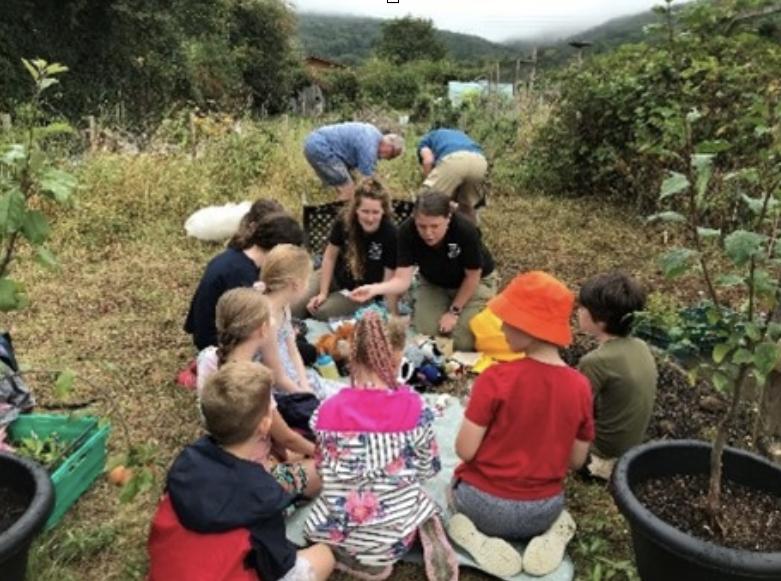
Since forming as a registered charity in 2020, The Space has grown quickly, expanding its services, its team, and its trustee board from three members to six. But with that growth came a familiar challenge: the board had remained deeply embedded in day-to-day operations, without the space or structure to step back and focus on strategic oversight.
As John Pimblott, Chair of Trustees at The Space puts it, “We’ve grown so quickly. We’ve all been focused on the operations and the detail, and we’ve not been really focusing on how to be a trustee, what that means, and the strategic forward direction.”
With a new CEO in post and new trustees joining, the board recognised it needed support to clarify roles and responsibilities, establish a shared way of working, and think more deliberately about succession.
Heather Beer, Regional Manager at Cranfield Trust, saw a board at an important crossroads. “They’d been through a period of significant change,” she explains. “What they needed was someone to help them get really clear about their roles and responsibilities, how they work together as a board, and how that relationship with the senior leadership team should function.”
Heather matched The Space with Joel Rose, a volunteer with extensive relevant experience, having led two national charities as chief executive and serving as a trustee of several others. “I felt he would have the gravitas and skills and experience to work with The Space really well,” says Heather. “His approach would be very practical, supportive, and kind.”
Joel began by conducting individual conversations with all six trustees and the CEO, working through a consistent set of questions about what was working, what wasn’t, and what each person hoped to change.
That groundwork led to a face-to-face away day in Cheddar, where the collective findings were shared with the whole board. “The first ten minutes was about naming the issues,” Joel explains. “But the focus was on the solutions.” By the end of the session, the group had collectively agreed on a set of actions, covering trustee recruitment, a trustee charter, a clearer job description for the Chair, ways of working, and annual trustee reviews, each assigned to a named individual with a deadline.
John felt Joel approached the project with the perfect attitude. “Joel came in at a senior level and told us, ‘guys, you know better, you know what you should be doing, but you’re not doing it.’ John continued, “You can’t buy that. Well, you can, but you pay a fortune for it!”’
The Space came away from the project with a clear, agreed action plan and a renewed sense of how to function as a board. The project has given the trustees a shared understanding of their strategic role and a concrete set of priorities to work towards, at a time when that clarity matters more than ever.
"If you don't have a board of trustees working together properly, giving that strategic oversight and letting the operations team do their bit, then you're in trouble. We wouldn't have got there without Joel. We wouldn't have got there without Cranfield.”
The practical shift in how the board operates is already being felt. Where trustees were previously drawn into operational problem-solving, they are now focused on asking the right strategic questions. As John explains: "We said to our CEO and the team: no surprises. If it's planned and it doesn't go well, we can cope with that. But surprises we can't cope with. Joel's approach was to question absolutely everything: How do you know that? How certain are you? Before, we'd have been in the details trying to solve it. Now we're up there saying: you solve it, and we will ask you, what's the risk?”
Ian Biggs, a trustee involved in the project, reflected on what that means for the people The Space serves: "The board will be in a better place to support our operational team, have confidence to adapt our activities to the needs of our beneficiaries, and ensure we have a long-term future.”
For Joel, the key was helping the board recognise that their challenges, while real, were far from unique. "Trustees of many charities I come across don't have experience of other organisations. So you often feel like you're uniquely dysfunctional. But actually, everything they were experiencing is very common. Having someone who's seen it all before is really useful."


